
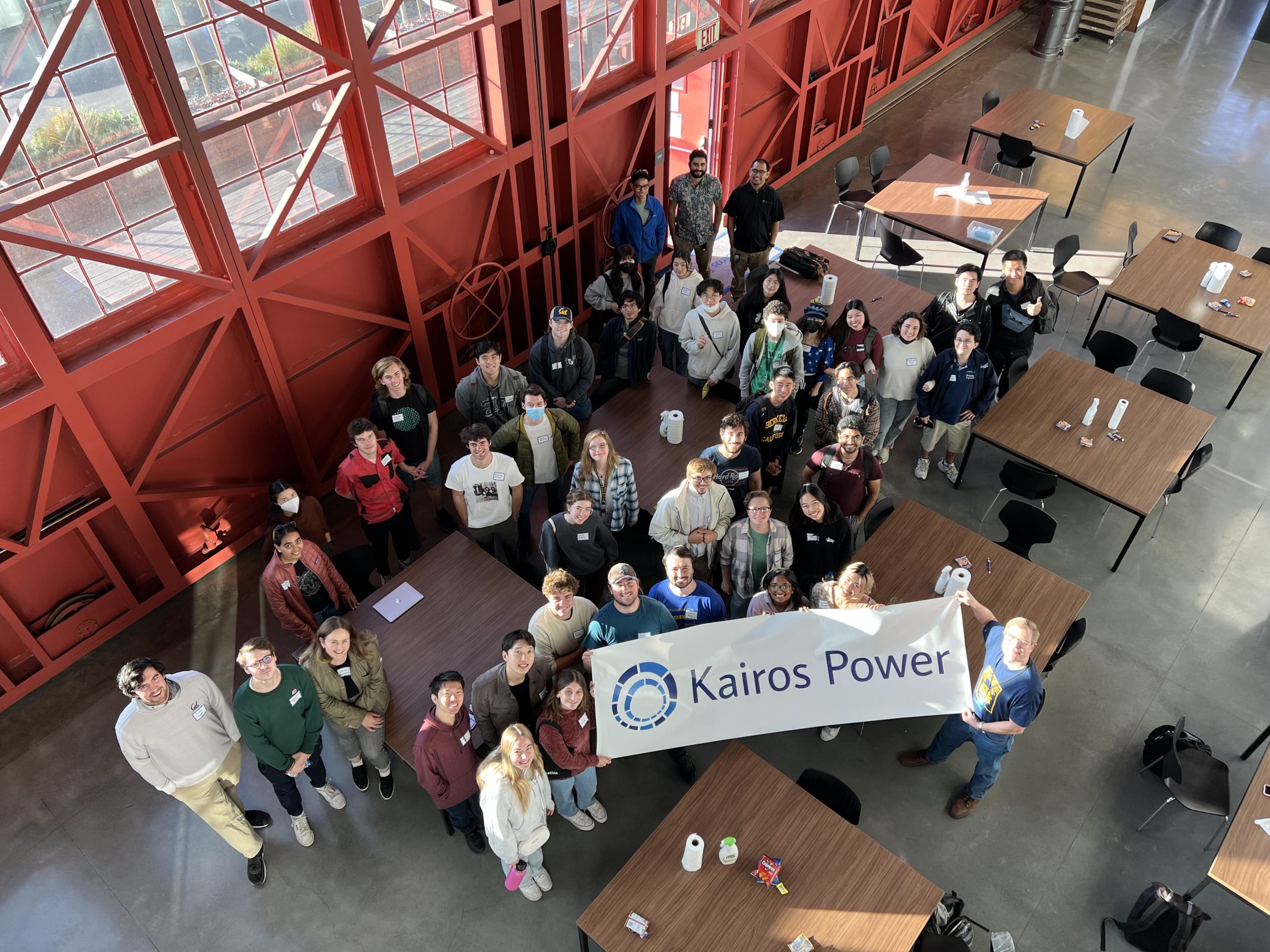
The ANS Road Ralley was a blast! Check out the pictures below!
2012
ANS Events for this Semester
Welcome back everyone! We hope you had a good break! There are are many exciting events planned for UC Berkeley ANS this semester. Here is the list so far:
Thursday January 26 Happy Hour, location TBA, 7 PM
Friday Feb 10, Road Rally around Berkeley
Thursday Feb 23, Happy Hour
Saturday March 10, Ridiculous outing such as paintball or trampoline dodgeball
Thursday April 5, Bowling
Thursday April 12- Sun April 15 Las Vegas, complete with photo scavenger hunt
2011
Bowling Night at Albany Bowl
Bowling Night was a lot of fun! Thanks to everyone who could make it out! Check out the pictures below!
2011
ANS General Meeting Tuesday 10/11
There will be an ANS General Meeting on Tuesday October 10th at 7pm. This will take place in Etcheverry Hall, 3105. Please be sure to attend as there will be free pizza and drinks!
2011
ANS Dinner Tuesday 9/20
Date: Tuesday, September 20, 2011
Social Mixer: 5:30 pm
Dinne 6:30 pm
Program: 7:30 pm
Place: Alfred’s Steakhouse, 659 Merchant Street, San Francisco
BART riders: Go seven blocks north of Montgomery St. station on Montgomery St. and turn left on to Merchant Street.
Drivers: Park in Hilton Hotel public parking on Washington St, one block north of Merchant St. between Montgomery and
Kearney. Bring your parking stub into the restaurant for validation.
Reservation: Make a reservation by responding to williams34@llnl.gov by Mon., September 19, 2011, or by calling (925) 423-1945.
Your reservation will be recorded unless you receive a rejection message of your e-mail.
Cost: $35, Northern California Section ANS members; $40, Visitors; $10 Students
Speaker: Mark Bandstra, UC Berkeley Nuclear Engineering Department
Topic: Fukushima Fallout Monitoring at UC Berkeley
Abstract:
The massive earthquake and tsunami off the northeast coast of Japan on March 11, 2011 caused extensive damage at the Fukushima Daiichi nuclear power plant. During subsequent venting and explosions at the reactor site, there were releases of volatile fission products such as isotopes of iodine, cesium, and tellurium. Trace amounts of these isotopes proceeded to spread throughout the atmosphere and were detectable in California around March 17. In the days after the disaster, the Berkeley Radiological Air and Water Monitoring (BRAWM) Project began measuring trace radioisotopes in the local environment. BRAWM has detected radioactive isotopes from Fukushima Daiichi in the air, rainwater, creek runoff, milk, soil, strawberries, and leafy vegetables. The team continues to monitor fallout levels in order to understand the nature of the radioactive releases from Fukushima as well as quantify the dilution or accumulation of the radioisotopes as they make their way through the San Francisco Bay Area environment and food chain. I will discuss the results of our measurements, focusing particularly on what we can learn about the disaster. I will also discuss the public outreach component of the project, including the concerns and other feedback we have received through our online forum.
Upcoming meetings:
19 Oct. 2011, Siegfried Hecker, Stanford University Center for International Security and Cooperation
TBD Nov. 2011, Susan Fry, Bay Delta Office Manager, U.S. Dept. of the Interior
2011
ATOMS: teaching kids Nuclear Engineering
On Sunday 4/10, Nuclear Engineering undergraduate and graduate students met kids of the ATOMS after school program. Through exciting experiments kids went from one room to another of the Nuclear Engineering Department, learning nuclear physics in a simple and exciting way. It was a great effort for many NE students, but ATOMS visit was a success! Thank you guys for all the time you put in the ATOMS visit!
2011
Student Panel Discussion on Nuclear Energy and the Events at Fukushima: Wednesday March 30, 6-8 pm
As events continue to unfold at the Fukushima Daiichi nuclear power plant in Japan, it is difficult to make sense of the complex information presented in the media. Ph.D. students from the UC Berkeley Nuclear Engineering Department will clarify the facts about the accident at Fukushima, discuss the risks of nuclear energy technology, and reflect on the options and decisions that lie ahead for nuclear energy.
Hour 1: Timeline of events at the Fukushima nuclear power plants
Hour 2: Conversation on the future of nuclear energy
Speakers: Denia Djokic, Lance Kim, Raluca Scarlat – Department of Nuclear Engineering
Moderator: Sebastien Lounis – BERC Co-president
Date: Wednesday, March 30 6:00 – 8:00 PM
Location: Wells Fargo Room 4th floor Cheit Hall
Haas School of Business
2011
Special Symposium – Earthquakes, tsunamis, and nuclear fallout: Is California at Risk Like Japan?
Date: Tuesday, March 29, 2011
Time: 5:30pm-7:00pm
Location: Sutardja Dai Hall, Banato Auditorium, UC Berkeley
http://bie.berkeley.edu/japanquakesymposium
Symposium Description
As Japan grapples with the effects of a massive earthquake, devastating tsunami, and potentially catastrophic meltdown of multiple nuclear reactors, it is appropriate to consider whether California faces similar risks.
Like Japan, California sits on the so-called “Ring of Fire”, the boundary of the Pacific Plate whose potential for seismic activity poses a serious threat to populated areas. But, how big is the risk to California in particular?
Speakers:
Roland Burgmann, Professor and Chair of Earth and Planetary Science, UC Berkeley “What does the future hold for earthquakes in CA?”
Douglas Dreger, Professor of Geophysics, Department of Earth and Planetary Science, UC Berkeley
“What advance warning will we receive?”
Eric Geist, Research Geophysicist at USGS Pacific Coastal & Marine Science Center “Are we at risk from tsunamis?”
Stephen Mahin, Professor of Civil and Environmental Engineering, UC Berkeley, and Director of the Pacific Earthquake Engineering Research Center “Will our buildings hold up?”
Norman Abrahamson, Adjunct Professor of Civil and Environmental Engineering, UC Berkeley “Will our infrastructure survive?”
Per Peterson, Professor and Chair of Nuclear Engineering, UC Berkeley “How safe are our nuclear power plants?
2011
Technical brief on MOX fuel use in Japan
Click the link below to access the PDF on the consequences of MOX fuel use in Japanese reactors.
2011
Japan Relief Fund
ANS has established the Japan Relief Fund to help our friends, colleagues, and their families in Japan who have been affected by the earthquake and tsunami. The beneficiaries of this fund will be determined by the ANS and sister organizations in Japan. We’ll work to be sure the fund benefits the nuclear power plant employees and their families. To donate, please click on the Support Japan button below! Thank you!


Follow Us!